
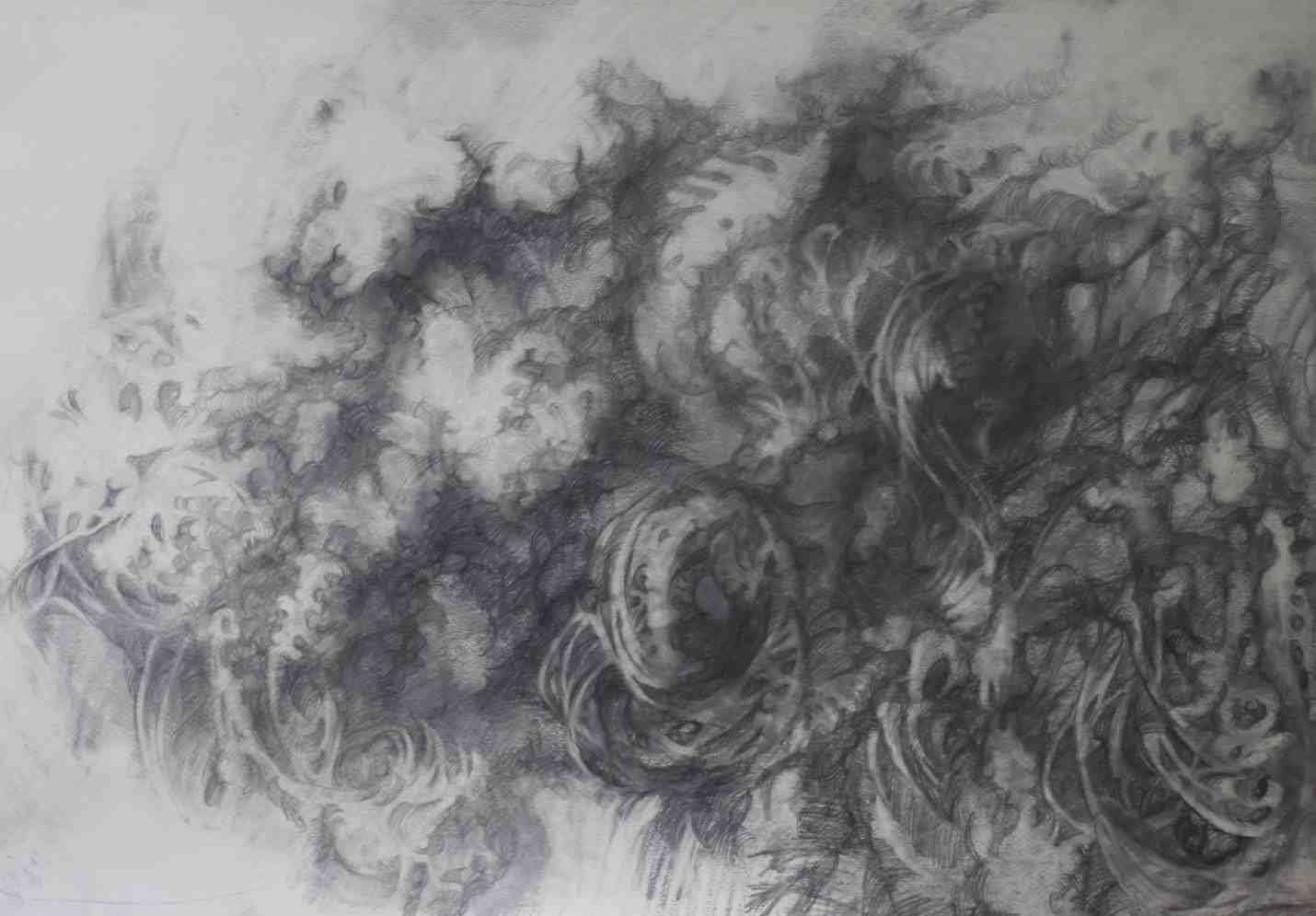
Asian Artist: Hanoi-based artist Triệu Minh Hải creates intricate, painstakingly detailed pencil drawings that employ mathematics equations to create visually complex beauty.
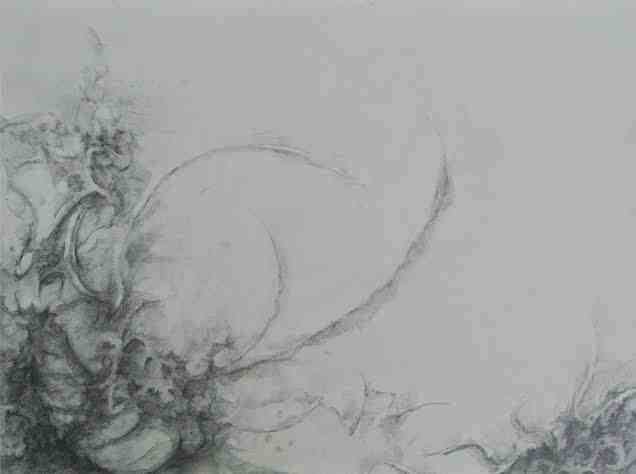
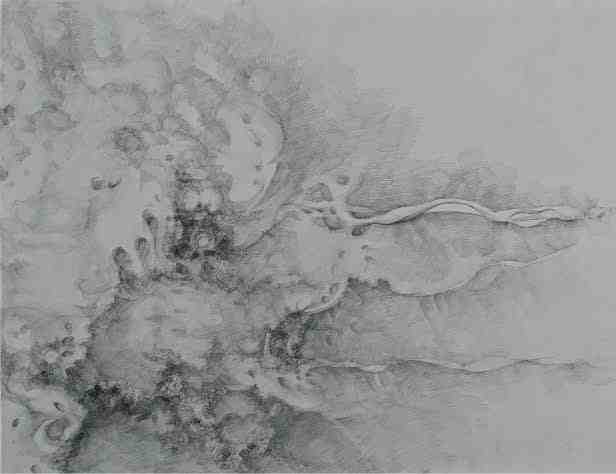
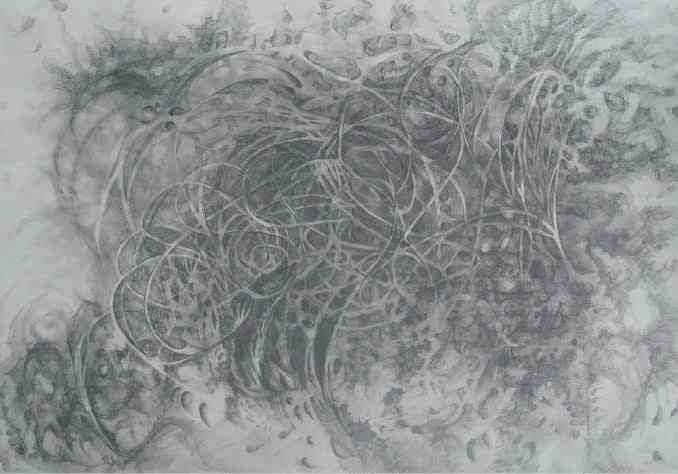
‘Fractal Series 1’ – 55cm x 79,5cm; ‘Fractal Series 2’ – 79,5cm x 110cm; Pencil Painting – 2012-2014
Words by Sadie Christie ● Images courtesy of Nhà Sàn Collective
The unique, intricate beauty of a snowflake has been the poetic metaphor of individuality for centuries. While each snowflake is distinct, when you strip away the sentiment all snowflakes conform to a set of complex geometric patterns created and calculable using the artistic tools of nature: mathematics.
While each snowflake is distinct, when you strip away the sentiment all snowflakes conform to a set of complex geometric patterns created and calculable using the artistic tools of nature: mathematics.
In his series ‘Latcarf – Fractal’ Triệu Minh Hải experiments with the geometric figure coined by Benoit Mandelbrot, who defined a fractal as a rough, or fragmented shape that when divided into parts, are smaller approximate versions of the whole. You can see examples of them everywhere: in topography, trees, crystals, galaxy formation and that unique snowflake.
Though Hanoi-based artist Triệu Minh Hải graduated from the University of Fine Arts, he also has a background in engineering. His knowledge of both disciplines marries his creative focus to the intrinsic connection between mathematics and aesthetics.
Hải is not the first artist to play with fractals. Fractal art became popular in the 80’s. Digital software was created into which Mandelbrot’s algorithm is entered and the results are presented as images. Though a computer can create such images in seconds, Hải took over three years to research, examine and draw the series using pencil.
Multiple canvasses are used for each set. The objects spill over, jutting or billowing out from themselves in endless patterns. Although the mathematics behind fractals can be mind-bendingly complex, it is not necessary to have a vast knowledge of mathematics in order to comprehend certain characteristics of fractals, such as self-similarity. Hải’s series seems to focus on this aspect and interpretation rather than exact equations. In one piece, shapes take on human forms, bending, twirling, and folding graceful limbs in physical movement. It is a study of observation, deconstruction, and endurance that Hải fuses with imagination in order to create art that reflects the outpouring of nature’s order all around us.
●●
Triệu Minh Hải’s exhibition ‘Latcarf – Fractal’ is displayed from 21 November to 14 December at Nhà Sàn Collective at 24 Lý Quốc Sư. He will be giving an artist talk there on 23 November 2014.
●
If you want to learn more about the mathematics behind Triệu Minh Hải’s art, get a hold of these books:
Mandelbrot, Benoît B. (1983). ‘The Fractal Geometry of Nature’
Bovill, Carl (1996). ‘Fractal Geometry in Architecture and Design’


